
This article has been updated for T Shirts Australia. It was originally published on The Blank T Shirt Shop, which is now part of T Shirts Australia.
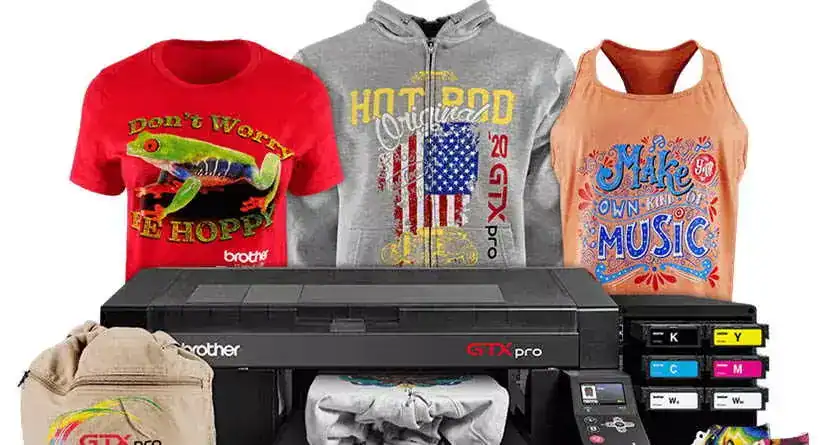
DTG printing, or Direct to Garment printing, is one of the most widely used methods for producing high-quality custom t-shirts. It allows detailed, full-colour designs to be printed directly onto fabric using specialised digital printers.
If you’re creating custom apparel or running a t-shirt business, understanding how DTG works will help you choose the right printing method for your needs.
What Is DTG Printing?
DTG (Direct to Garment) printing is a digital printing method that applies ink directly onto fabric using specialised inkjet technology.
Instead of using transfers or cut materials, DTG works more like a high-end printer—printing your design straight onto the garment. This allows for soft, detailed prints with a wide colour range.
How DTG Printing Works
The DTG process involves several key steps:
- Pre-treatment: The garment is prepared to help the ink bond properly to the fibres.
- Positioning: The t-shirt is placed onto the printer’s platen to keep it stable.
- Printing: The design is printed directly onto the fabric using water-based inks.
- Curing: Heat is applied to set the ink and ensure durability.
This process allows for high-resolution prints with strong detail and colour accuracy.
Why DTG Printing Is Popular
DTG has become a go-to method for custom t-shirts because of its flexibility and print quality.
- Full-colour printing: Ideal for detailed artwork and photographic designs
- Soft feel: Ink is absorbed into the fabric rather than sitting on top
- No minimum orders: Suitable for one-off prints or small runs
- Quick setup: No screens or complex preparation required
Because it’s a digital process, DTG is particularly well suited to custom and on-demand printing.
DTG vs Other Printing Methods
Each printing method has its strengths, and DTG is often chosen when detail and flexibility are important.
- DTG vs DTF: DTG prints directly onto fabric, while DTF uses a transfer film
- DTG vs Vinyl: DTG handles complex, full-colour designs, while vinyl suits simple shapes
- DTG vs Screen Printing: DTG is better for small runs and detailed artwork
Rather than replacing other methods, DTG is used alongside them depending on the job.
DTG Printing at T Shirts Australia
We use professional digital printing methods (Direct to Film (DTF) and Direct to Garment (DTG)). Orders proceed to print with the artwork supplied at checkout. The method used depends on design and garment colour.
Upload your artwork, or create it using our online design tool. Please ensure your design is print-ready before submitting.
This approach ensures each order is matched to the most suitable printing method for the best result.
Using the T Shirts Australia Design Tool
To create your custom t-shirt, select your product, choose your colour and sizes, then click Start Design.
The full-page design studio allows you to:
- Upload your artwork (JPG, PNG, GIF, SVG, WebP)
- Add and edit text
- Preview designs on front, back, and other print areas
This allows you to see exactly how your design will look before placing your order, helping avoid common issues.
Turnaround and Ordering
Turnaround times vary depending on the product and service level selected and are confirmed at checkout.
Express orders are prioritised for 3 to 4 Business day handling and are printed ahead of standard turnaround.
When Should You Use DTG?
DTG is a strong choice when you need:
- Highly detailed or photographic designs
- Soft-feel prints
- Small or one-off orders
It is particularly effective for cotton garments, where the ink bonds well with the fibres for long-lasting results.
Final Thoughts
DTG printing has become a key part of modern t-shirt production. Its ability to deliver detailed, full-colour designs with a soft finish makes it one of the most practical options for custom apparel today.
If you’re ready to create your own custom t-shirts, you can start here: Custom T-Shirt Printing
